
Huddle House vs Waffle House: Which Southern Diner Reigns Supreme?
When it comes to iconic American diners offering 24/7 comfort food at budget-friendly prices, two names dominate: Huddle House and Waffle House. While these casual dining institutions share similarities—both operate around the clock, serve Southern-style breakfast favorites, and maintain loyal customer bases—they represent fundamentally different philosophies about what modern diners should be. Understanding their distinctions helps you choose the right establishment for your specific needs.
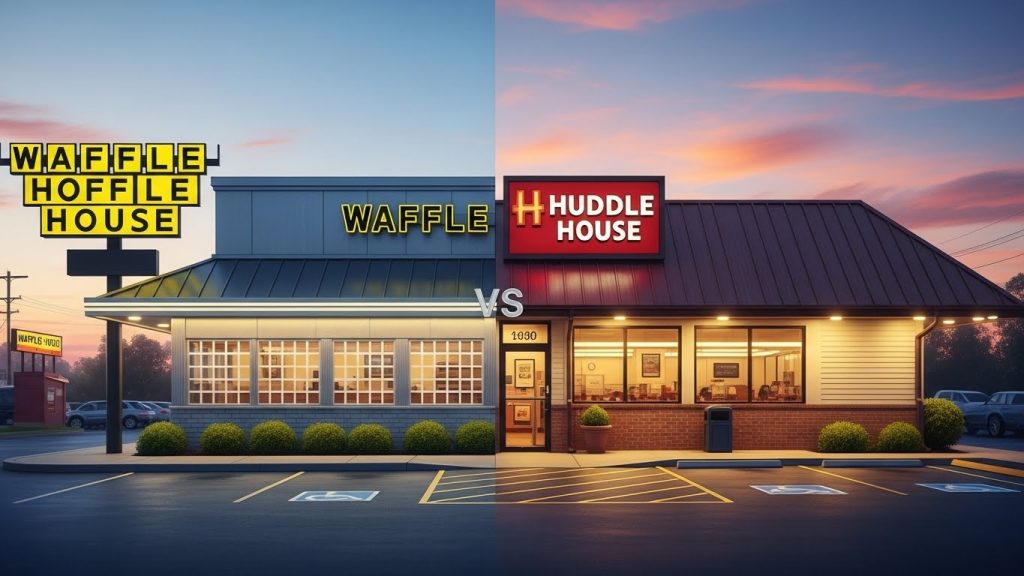
Brand Philosophy and History Huddle House vs Waffle House
Waffle House (founded 1955) specializes in product excellence and operational theater. The brand focuses exclusively on breakfast mastery, particularly its signature waffles and customizable hashbrowns. With 2,100+ locations nationwide, Waffle House became a cultural icon, known for its open kitchens where skilled cooks perform with remarkable efficiency. The brand’s reliability during natural disasters has earned it an unofficial “Waffle House Index” status among emergency management officials—where Waffle House operates indicates community recovery progress.
Huddle House (founded 1964) prioritizes community connection and comprehensive quality. Rather than specializing, this 450-location chain emphasizes warm hospitality, personalized service, and menu variety. Regular customers are greeted by name, and the atmosphere encourages lingering conversations. Huddle House functions as a neighborhood gathering space rather than a transaction point, concentrating primarily in the Southeast.
Menu Comparison: Where They Differ Most
Waffle House’s strength lies in breakfast specialization. The signature waffle achieves what few competitors match: crispy exterior, tender interior, perfect sweetness, and authentic vanilla flavor. The hashbrown customization system (smothered, covered, chunked, topped—or any combination) creates personalized experience while kitchen staff execute orders with impressive speed. A typical waffle breakfast costs $8-9 and arrives in 5-7 minutes.
However, Waffle House’s lunch and dinner menus feel secondary. Burgers are adequate but unmemorable, and customers admit ordering non-breakfast items feels like missing the point.
Huddle House’s strength is comprehensive menu diversity. Beyond excellent pancakes and French toast, you’ll find burgers, meatloaf, salads, and daily specials. This variety means families with different preferences find appealing options. Pancakes ($7.50-8.99) arrive generous and hot—three large pancakes rather than one or two—with fluffy interior and crispy edges. The menu’s breadth prevents menu fatigue for regular customers.
Portion size difference is significant. Huddle House meals are noticeably larger. A Huddle House pancake breakfast satisfies most appetites without supplements. Waffle House portions, while adequate, frequently prompt additional item purchases (extra bacon, toast), increasing total cost. For budget-conscious diners, Huddle House’s generous portions create superior value despite nearly identical base prices.
Price and Value Analysis
Both chains offer exceptional affordability compared to full-service restaurants. A typical meal at either establishment costs $9-14 including beverage. However, value-for-money calculations differ:
Waffle House pricing structure assumes customers will add multiple items. A single waffle ($5.99-6.99) plus eggs ($3-4) plus hashbrowns ($3-4) totals $12-15 for a complete breakfast. The transparent menu and consistent pricing provide predictability.
Huddle House pricing structure treats entrees as complete meals. A pancake order automatically includes substantial portion plus sides. This all-inclusive approach means final bills are often lower despite similar base prices. Huddle House occasionally offers daily specials and promotional bundles, creating additional savings opportunities. Waffle House maintains consistent pricing without promotions.
Value verdict: Huddle House delivers superior value through larger portions and included sides. Budget-conscious diners receive more food for nearly identical cost.
Hours, Location, and Accessibility
Both operate 24 hours daily at most locations, making both equally accessible for late-night dining and irregular schedules. Location density differs dramatically:
Waffle House’s 2,100+ locations across 25+ states ensure nationwide availability. Major cities contain 10-50+ locations. Road-trippers find guaranteed Waffle House access regardless of travel region. This geographic dominance makes Waffle House the logical choice for travelers and those living outside the Southeast.
Huddle House’s 450 locations concentrate heavily in the Southeast (Georgia, South Carolina, Florida, Tennessee, North Carolina). Finding a Huddle House outside this region requires proximity research. For Southeast residents, accessibility is excellent. For those elsewhere, Waffle House’s network is substantially more convenient.
Atmosphere and Service Experience
Waffle House’s atmosphere is deliberately theatrical and efficient. The open kitchen, chrome counter seating, and bright fluorescent lighting create an energetic performance space. Cooks work with impressive speed and precision—watching skilled food preparation becomes entertainment. During late-night hours, the sparse crowd and reduced kitchen noise create intimate atmosphere. Service is professional but transactional, prioritizing speed over personal connection. This appeals to solo diners, night-shift workers, road-trippers, and those seeking authentic American experience without pretense.
Huddle House’s atmosphere emphasizes warmth and community. Booth seating, warm lighting, local photography, and relaxed pace create inviting gathering space. Staff remember regular customers’ preferences, and conversations extend beyond simple order-taking. Service is notably slower but genuinely hospitable. This appeals to families, senior citizens, local community members, and those seeking relationship-based dining experiences.
The fundamental difference: Waffle House offers efficient, theatrical dining; Huddle House offers warm, connective dining. Neither approaches superiority—they serve different values.
Nutritional Considerations
Both chains offer nutritional variety, though neither specializes in health-conscious dining.
Healthier options are more abundant at Huddle House. Garden salad with grilled chicken (350-450 calories), egg-white omelets, grilled chicken sandwiches, and diverse salad options provide legitimate low-calorie alternatives. Health-conscious Huddle House visitors find genuine choices.
Waffle House options are limited. While egg-white omelets and salads exist, the breakfast-focused menu constrains variety. A typical waffle breakfast (waffle, eggs, hashbrowns with butter and syrup) totals 800-1000 calories—exceeding half daily recommended intake in one meal.
Both chains accommodate gluten-free (at select locations), low-carb, and vegetarian preferences, though Huddle House’s menu diversity provides better accommodations. For those with serious dietary restrictions, discuss concerns with location managers rather than assuming standard protocols.
Consumer Reviews and Genuine Customer Praise
Waffle House customers emphasize: iconic waffles impossible to replicate elsewhere, the theatrical enjoyment of watching skilled cooks, hashbrown customization creating personalized experience, cultural significance and late-night tradition participation, exceptional operational efficiency, and reliability across 2,100 locations. Road-trippers describe Waffle House visits as memorable travel moments, not mere refueling stops.
Huddle House customers emphasize: remarkable consistency across all locations, genuine hospitality and staff recognition of regulars, generous portions creating strong value, exceptional family-friendliness, menu variety accommodating diverse preferences, and community integration rather than chain-store feeling.
Common criticisms: Waffle House faces complaints about smaller portions, limited non-breakfast options, occasional waffle inconsistency, weak coffee, and chaotic breakfast-rush atmosphere. Huddle House faces criticism for limited regional availability, perceived lack of innovation, and inconsistency between franchise locations.
Final Recommendation Framework
Choose Waffle House if you:
- Prioritize exceptional waffles and breakfast specialization
- Travel frequently and need nationwide accessibility
- Value late-night culture and theatrical dining
- Appreciate operational excellence and efficiency
- Enjoy counter seating and natural social community
Choose Huddle House if you:
- Prioritize community relationships and personal recognition
- Want comprehensive menu variety for group dining
- Seek generous portions and superior value
- Dine regularly and enjoy staff relationships
- Prefer warm, family-friendly atmosphere
Both work equally if you simply need 24-hour dining.
Conclusion
Declaring one “supreme” misses the point. Waffle House and Huddle House excel through different philosophies: one through specialization and operational theater, one through community connection and comprehensive quality. Rather than competing directly, they serve different customer values and situations.
Visit Waffle House for iconic waffles, road-trip adventures, and 3 AM experiences. Visit Huddle House for family meals where you feel genuinely welcomed and for community connection. The real victory is having two excellent 24-hour options offering genuine value. Your choice depends on whether specialization and efficiency or community and variety matter more to you in that specific moment.